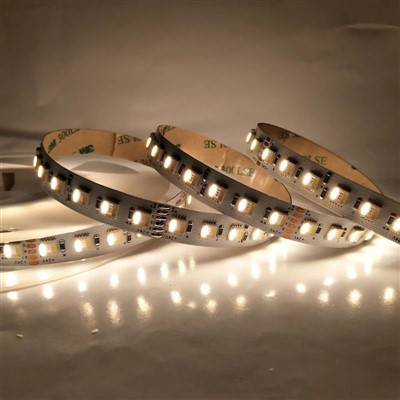

LED filament bulbswidely used in indoor and outdoor, it has good waterproof performance, and high brightness, lighting capacity is strong, decorative is also very good
Shenzhen Midoriled Co., Ltd. :Your Professional Led Bulb Light Manufacturer !
Midoriled is a professional LED manufacturer with the goal of providing quality LED technology, great customer service, and superior product support to our customers. Over the years we’ve expanded to be one of the largest leading suppliers of LED lighting and accessories in China. We now serve all types of customers within the Industrial, Commercial, Vehicle, Residential, and Landscape sectors. We’re constantly looking out for new products and adding more to our existing product lines.
Rich Products
We specialize in LED linear strips, LED modules, LED wall washers, LED fluorescent lights, LED spotlights, LED accessories and so on, all of which are widely used in urban lighting decoration, advertising light boxes backlight, and indoor home.
Quality Assurance
Midoried has a well-trained team including full experienced technicians and salesman. All our offerings are CE and SGS certified and are the preferred choice of architects, lighting designers, and electrical contractors because of their robust construction, durability, and top-notch color rendering capability.
Unmatched Warranty
We guarantee their quality with up to 3 years of warranty on most of our LED Strips. If the color temperature, brightness, or size does not work for your project, you can return them back to us hassle-free.
Leading Service
We have many years of industry experience, a complete production management, quality supervision, and sales service operation system. Whether you want to purchase LED strip lights or LED modules, just email your requirements and we can customize the product for you.
-
![Led Energy Saving Light Bulb]() Led Energy Saving Light BulbLED energy saving, no heavy metals for environment, wide colour temperature, super long working life.view more
Led Energy Saving Light BulbLED energy saving, no heavy metals for environment, wide colour temperature, super long working life.view more
Excellent quality LED, high brightness, low attenuation, special heat dissipation instruction.
Application for... -
![Led Spot Light]() Led Spot LightThis LED spotlight is perfect for use as a replacement deck light lamp, particularly for combination steaming/deck light fixtures. It is also suitable as deck head mounted lamp particularly in external and utility areas where the bright...view more
Led Spot LightThis LED spotlight is perfect for use as a replacement deck light lamp, particularly for combination steaming/deck light fixtures. It is also suitable as deck head mounted lamp particularly in external and utility areas where the bright...view more -
![LED Filament Bulb]() LED Filament BulbThis 2W led filament bulb is built for indoor lighting fixtures with many sockets, like vanity lights and pendant sputnik chandeliers. Filament led technology gives a retro vintage looking. Clear glass provides wide 360 degree beam...view more
LED Filament BulbThis 2W led filament bulb is built for indoor lighting fixtures with many sockets, like vanity lights and pendant sputnik chandeliers. Filament led technology gives a retro vintage looking. Clear glass provides wide 360 degree beam...view more -
![RGB Smart Light Bar]() RGB Smart Light BarThis Smart flow light bar desk RGB Smart Light Bar Mini Atmosphere Lamp for game PC TV Backlight Room Decorationview more
RGB Smart Light BarThis Smart flow light bar desk RGB Smart Light Bar Mini Atmosphere Lamp for game PC TV Backlight Room Decorationview more -
![LED Festoon Light String]() LED Festoon Light StringG40 Outdoor Warm White Patio Garden Party decoration LED Festoon Light Stringview more
LED Festoon Light StringG40 Outdoor Warm White Patio Garden Party decoration LED Festoon Light Stringview more
low temperature resistance , flame-retardant, anti-ultraviolet ray, waterproofness reach to IP65. -
![LED Filament Bulbs For Decoration]() LED Filament Bulbs For DecorationLED filament bulbs widely used in indoor and outdoor, it has good waterproof performance, and high brightness, lighting capacity is strong, decorative is also very goodview more
LED Filament Bulbs For DecorationLED filament bulbs widely used in indoor and outdoor, it has good waterproof performance, and high brightness, lighting capacity is strong, decorative is also very goodview more


What is Led Bulb Light?
The LED abbreviation stands for Light Emitting Diode. An LED bulb light produces illumination through these diodes, as opposed to the filament and gas contained in incandescent and other older bulb types.
LED light bulbs offer numerous advantages over traditional incandescent and fluorescent lighting options. These advantages have contributed to the widespread adoption of LED bulbs in various applications. Here are the key advantages of LED light bulbs:
Energy Efficiency
Unlike traditional options, such as incandescent or fluorescent bulbs, LED bulb lights operate with remarkable efficiency, which translates into reduced electricity consumption.They convert a significantly higher percentage of electrical energy into visible light, wasting less energy as heat. In commercial settings, where lights represent a significant portion of energy usage, the switch to LED bulb lights can lead to substantial cost reductions and a lower carbon footprint.
Cost Savings
LED bulb lights offer long-term financial benefits that arise from their efficiency, durability, and reduced maintenance requirements. They can typically achieve energy savings of 50% to 80% or more compared to a traditional incandescent bulb or a fluorescent light bulb, leading to substantial cost reductions. Additionally, another advantage of LED lights is their long lifespan, often lasting tens of thousands of hours. This longevity eliminates the frequent need for replacements, reducing maintenance and replacement costs. In terms of savings through enhanced durability, LEDs are constructed with solid-state components, making them more resistant to shocks, vibrations, and external impacts compared to fragile incandescent or fluorescent bulbs.
LED Bulb Light Benefits for Health
Firstly, an LED solution emits a type of light that closely resembles natural daylight. This is beneficial for our circadian rhythm—the internal clock that regulates our sleep-wake cycle. Secondly, LEDs don't emit harmful ultraviolet (UV) radiation, unlike some other light sources. In addition, you can minimize exposure to UV rays and create a safer environment via LEDs, especially in settings where lights are in close proximity to occupants, such as offices, schools, and healthcare facilities.
Flicker-Free Illumination
One of the notable LED bulb light benefits is its ability to provide instant and flicker-free illumination, enhancing both their visual comfort and overall functionality in various settings. As soon as they're switched on, LEDs emit full illumination, eliminating any delay or warm-up period. This instant illumination is particularly advantageous in environments where immediate lighting is crucial, such as in emergency situations or areas requiring rapid response times. The absence of flickering makes them compatible for applications that require high-quality compact lights, such as photography, videography, and visual inspections, which need precise and accurate illumination without any distortion caused by flickering light sources.
A More Environmentally Friendly Solution
Firstly, their reduced energy consumption translates into lower demand for electricity generation, ultimately leading to decreased greenhouse gas emissions and a smaller carbon footprint. Additionally, by eliminating mercury from lights, LED bulb lights reduce the potential for environmental contamination and ensure safer disposal at the end of their lifespan. Their durability also contributes to their environmental friendliness since they're constructed from robust materials that are resistant to breakage, making them less prone to damage during handling, transportation, or installation.
Design Flexibility
The unique characteristics of LED bulb lights allow for creative and customizable designs that can transform spaces and enhance aesthetics, even in commercial environments. One of the key aspects of design flexibility with LEDs are theirs compact size—the chips are small and can be easily integrated into various fixtures, luminaires, or even unconventional designs. This compact size allows for sleek and minimalist fixtures that can blend seamlessly with different architectural styles and interior designs.
Directional Lighting
Unlike traditional options that emit light in all directions, such as a halogen lamp, LED bulb lights can be designed to direct light precisely where it's needed. One of the added bonuses of this flexibility is the enhancement of task lights, where concentrated illumination is essential, improving visibility, reducing shadows, and enabling task performance with greater accuracy and comfort. Directional illumination also minimizes light wastage. By focusing light in specific directions, LEDs ensure light is directed only where needed, avoiding unnecessary illumination of surrounding areas.
Wide Range of Color Options
LED bulb lights are available in various color temperatures, which determine the perceived warmth or coolness of the light. The color temperature is measured in Kelvin (K) and ranges from warm white (around 2700K to 3000K) to cool white or daylight (5000K and above). This range allows users to select the desired color temperature to match the intended space ambiance or functionality.
Enhanced Safety
LED bulb lights emit significantly less heat compared to regular lights like incandescent bulbs. The heat generated by traditional bulbs can pose a fire hazard, especially in enclosed spaces or when lights are in close proximity to flammable materials. In contrast, LEDs remain relatively cool, reducing the risk of accidental fires and burns. Furthermore, LED bulb lights are built with sturdy materials and solid-state components, making them more resistant to breakage and damage compared to fragile incandescent or fluorescent bulbs.
Components of LED Bulb Light
An LED light bulb is complicated technology. To help make LED technology more accessible, we explain the various components of an LED light bulb, which include:
LED Chips/Diodes
The light emitting diode is the part of the bulb that generates the light, and it’s made up of semiconductors that emit light when a current passes through. A bulb might have one diode or multiple, which is called an LED array. They will all do the same job of giving off light when powered by a current.
LED Drivers
The job of the driver in an LED light bulb is to control the electrical current – stepping it down from AC to DC, and maintaining a consistent level to avoid damaging the lights. LED lighting isn’t like older incandescent bulbs that work on the AC power of your home circuit board. You need it to be changed to DC – which is what the driver does. It’s part of a circuit that also tells the bulb when to switch on and off and, if your bulb is on a dimmer circuit, it regulates the brightness of the diodes.
Heat Sink
A heat sink is an extremely important part of your LED lighting. Light emitting diodes don’t work well with high temperatures, so the heat produced by the lights needs to be diverted away. LED light bulbs are much more efficient than traditional light bulbs, in that most of the energy is converted into light output. Without a good heat sink, the lights will burn out way too fast.
Bulb Cover
The bulb cover acts as a lens for your LED lighting. It helps to diffuse the LED light output across a wider space – so instead of seeing a tiny chip-sized light, you get a full glowing bulb. Unlike some older lights, such as compact fluorescent lighting, there’s no gas inside the cover. If the cover cracks, the bulb is typically still good to use.
Housing
The housing is the middle section of your LED bulbs, and its job is to protect the circuitry inside. It’s usually aluminum-lined, and it contains a metal plate which is the heat sink to draw heat away from the diodes.
Bulb Base
The base is the part of the light bulb that connects to the light fixture. LED bulb bases for standard bulbs are the same as older lights, with a range of sizes and styles available depending on the design of the bulb. You can also get all kinds of LED shapes – including spotlights, and LED tubing to replace older fluorescent lighting. They’ll still have the same bases needed to fit into the fixture.
There is no one type of LED light bulb. Though they are all very similar in construction, operation, and function, there are indeed many unique types of LED light bulbs. Knowing all the different kinds of light bulbs, their benefits, downsides, pros, and cons will aid you in taking the best course of action.
Alphanumeric LED Bulb Lights
Alphanumeric LED bulb lights are used to display—as is apparent from the name—numerical data, alphabetical information, or the like. They can be used on clocks, signs, announcements, and in many other cases where information needs to be projected.
Ceiling LED Light Fixture
Most homes have some kind of LED light fixture in either the living room, dining room, or kitchen. Furthermore, these kinds of LED lights come in multiple different forms. Some of these are explained below:
● Flush Mount Lights: These are comprised of an LED light surrounded by a decorative metallic casing. With the ability to light up an entire room for longer periods than traditional light bulbs, flush mount lights are a great LED light fixture investment.
● Lighting for Utility Purposes: These are the kinds of LED light bulbs that you would not use to light up your house. They are bright, strong, and—as a matter of fact—quite ugly. This makes them perfect for illuminating a space such as a warehouse or work garage.
● Recessed Lights: If you need to illuminate a room that has a low ceiling, then recessed lights (downlight fixtures) are for you. They are those that electricians refer to as “pot lights”—for that is what they look like.


RGB LED Lights
“RGB” stands for “Red, Green, Blue.” These types of LED lights can be combined in an almost infinite number of combinations to produce any requested color. The list of applications for RGB LED lights is endless. They can be used in outdoor/indoor home decorations, stage lighting, restaurant or store lighting, and in many more situations where the LED light is required. Additionally, if you just want to spice up your home a little bit with some luminescent decorations, then RGB LED lights are a perfect choice.
LED Pendant Lights
Most commonly used to light kitchen areas, living rooms, and other indoor home spaces, these kinds of LED lights are relatively cheap and energy-efficient. LED Pendant Lights can be described as a cost-effective light bulb wrapped in a pretty package. In fact, they are quite similar to flush mount lights—though they are not exactly the same.
Working Principle of LED Bulb Light
LED light bulbs operate based on a principle called electroluminescence. Electroluminescence is the phenomenon where light is emitted from a material when an electric current passes through it. The principle of LED light bulbs can be broken down into the following steps:
Electron Movement
When an electric current is applied to an LED bulb, it flows through the LED chip. The LED chip is made from a semiconductor material, such as gallium nitride (GaN) or gallium arsenide (GaAs).
Recombination
As the electric current flows through the LED chip, it encounters positively charged “holes” and negatively charged electrons. These charged particles combine or recombine in the semiconductor material.
Energy Release
When the electrons recombine with the holes in the semiconductor material, energy is released in the form of photons, which are particles of light. The energy level of the released photons determines the color of the light emitted.
Photon Emission
The released photons travel through the epitaxial layer and emerge from the LED chip. The optical components, such as lenses or reflectors, shape and control the direction of the emitted light.
LED light bulbs have become increasingly popular and are now widely used in various applications across different sectors. Their energy efficiency, long lifespan, and versatile design have made them the preferred lighting option in many settings. Here are some of the current applications of LED light bulbs:
Residential Lighting
LED bulbs are commonly used in homes for general lighting purposes. They can be found in ceiling fixtures, table lamps, floor lamps, and other common household lighting fixtures. LED bulbs provide bright and efficient illumination while reducing energy consumption and offering cost savings for homeowners.
Commercial Lighting
LED bulbs are extensively utilized in commercial buildings such as offices, retail stores, and hotels. LED lighting provides uniform and high-quality illumination, enhancing the overall visual appeal. Additionally, the energy-efficient nature of LED bulbs helps reduce operating costs for businesses.
Outdoor Lighting
LED light bulbs are ideal for outdoor lighting applications. They are commonly used in streetlights, parking lot lighting, pathway lighting, and landscape lighting. LED bulbs offer bright and focused illumination, improving visibility and safety in outdoor spaces.
Automotive Lighting
LED bulbs have revolutionized automotive lighting. They are used in headlights, taillights, turn signals, and interior lighting in cars and motorcycles. LED automotive lighting provides better visibility, energy efficiency, and a longer lifespan compared to traditional bulbs.
Display and Signage
LED light bulbs are extensively employed in advertising displays, digital signage, and billboards. Their brightness, vibrant colors, and ability to display dynamic content make them an excellent choice for capturing attention and conveying messages effectively.
Sports Lighting
LED lighting has transformed sports lighting, providing improved visibility and a better viewing experience for spectators. LED bulbs are used in stadium lighting for outdoor sports such as football, baseball, and soccer. The ability of LED bulbs to produce high-quality illumination and their durability make them an ideal choice for sports arenas.
Horticultural Lighting
LED bulbs are increasingly used in horticulture for indoor farming, greenhouse cultivation, and vertical farming. The ability to customize the light spectrum and optimize lighting conditions for plant growth has made LED bulbs a valuable tool in maximizing crop yield and quality.
Maintenance Tips of LED Bulb Light
To maximize the longevity of LED lighting and get the most out of your investment, follow these ten essential tips for extending their lifespan.
Clean Regularly
Dust and dirt accumulation on bulbs can obstruct light output and hinder heat dissipation, which may lead to overheating and reduced efficiency. Gently dust the LED surface using a soft, lint-free cloth to maintain optimal brightness and performance. Avoid using water or harsh cleaning agents, as they can damage the LED's electronic components.
Avoid Overheating
LEDs are sensitive to heat, and excessive heat can cause the internal components to degrade faster. Ensure proper ventilation in the area where LEDs are installed. Avoid placing the bulbs too close to heat-emitting appliances or in enclosed fixtures with limited airflow. This will help keep the LEDs cool and prevent premature failure.
Use Voltage Stabilizers
Fluctuations in voltage can adversely affect LED lights, leading to reduced lifespan and performance issues. Installing voltage stabilizers or surge protectors can help maintain a stable power supply, protecting it from voltage spikes and dips.
Optimal Operating Temperature
LEDs perform optimally within specific temperature ranges. Extreme cold or hot environments can impact their performance and lifespan. Check the manufacturer's guidelines for the recommended operating temperature range, and try to keep your LEDs within these limits.
Choose High-Quality LEDs
Invest in reputable LED brands known for their quality and durability. High-quality LEDs are designed with better heat dissipation mechanisms, ensuring that the LED chips and other components stay cool, resulting in a longer lifespan and consistent performance.
Dim LEDs Properly
If your LEDs are dimmable, make sure you use dimmer switches specifically designed for LEDs. Using incompatible dimmers can cause flickering or damage to the LEDs over time. Check the manufacturer's recommendations for compatible dimmer switches.
Turn Off When Not in Use
Although LEDs are energy-efficient, turning them off when not needed can further extend their lifespan and reduce energy consumption. If you know that you won't need the lights for an extended period, like during the daytime or when going on vacation, turning them off can help preserve their longevity.
Avoid Frequent On-Off Cycling
Frequent on-off cycling can put stress on the LED's electronic components, potentially shortening their lifespan. Consider using motion sensors or timers to automate your lighting, reducing the need for manual switching and minimizing wear on the LEDs.
Inspect Wiring and Connections
Regularly inspect the wiring and connections of your lighting system. Loose or damaged connections can cause voltage fluctuations, affecting the LEDs' performance and potentially leading to premature failure. Address any issues promptly to ensure consistent and reliable lighting.
Monitor Color Shift
Over time, some LED lights may experience a phenomenon known as color shift, where the color temperature changes slightly, resulting in a different hue. This is a normal characteristic of LED technology but can be more pronounced in lower-quality LEDs. Monitor your LEDs for any noticeable color variations and consider replacing bulbs that exhibit significant color shifts.
Frequently Asked Questions
We're professional led bulb light manufacturers and suppliers in China, specialized in providing high quality customized products. If you're going to buy discount led bulb light in stock, welcome to get pricelist from our factory.