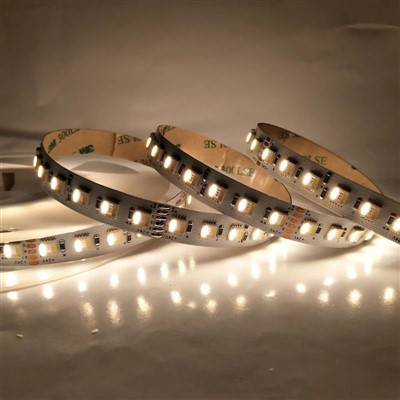

Shenzhen Midoriled Co., Ltd. :Your Professional LED Matrix Display Manufacturer !
Midoriled is a professional LED manufacturer with the goal of providing quality LED technology, great customer service, and superior product support to our customers. Over the years we’ve expanded to be one of the largest leading suppliers of LED lighting and accessories in China. We now serve all types of customers within the Industrial, Commercial, Vehicle, Residential, and Landscape sectors. We’re constantly looking out for new products and adding more to our existing product lines.
Rich Products
We specialize in LED linear strips, LED modules, LED wall washers, LED fluorescent lights, LED spotlights, LED accessories and so on, all of which are widely used in urban lighting decoration, advertising light boxes backlight, and indoor home.
Quality Assurance
Midoried has a well-trained team including full experienced technicians and salesman. All our offerings are CE and SGS certified and are the preferred choice of architects, lighting designers, and electrical contractors because of their robust construction, durability, and top-notch color rendering capability.
Unmatched Warranty
We guarantee their quality with up to 3 years of warranty on most of our LED Strips. If the color temperature, brightness, or size does not work for your project, you can return them back to us hassle-free.
Leading Service
We have many years of industry experience, a complete production management, quality supervision, and sales service operation system. Whether you want to purchase LED strip lights or LED modules, just email your requirements and we can customize the product for you.
-
![LED Collar For Dog]() LED Collar For DogLED Collar design can prevent falling off or being bitten off. Compared to other holder, The led collar are more cost effective and do not require additional purchase of dog collars .view more
LED Collar For DogLED Collar design can prevent falling off or being bitten off. Compared to other holder, The led collar are more cost effective and do not require additional purchase of dog collars .view more -
![Scrolling Led Arduino]() Scrolling Led ArduinoScrolling LED sign,Multiaction for displaying, including snow, spray, rotate, scroll, and etc Different scrolling actions for you choice, like flashing, static, moving to left, moving to right and so on.view more
Scrolling Led ArduinoScrolling LED sign,Multiaction for displaying, including snow, spray, rotate, scroll, and etc Different scrolling actions for you choice, like flashing, static, moving to left, moving to right and so on.view more -
![Usb Led Matrix]() Usb Led MatrixThis is a DIY Show Car Messager Led Board, Show Multi-language Texts, Graffiti, Animations, Music Equalizer. Light up your life, Tips for safe driving and increased store sales.view more
Usb Led MatrixThis is a DIY Show Car Messager Led Board, Show Multi-language Texts, Graffiti, Animations, Music Equalizer. Light up your life, Tips for safe driving and increased store sales.view more -
![Flexible Dot Matrix Display]() Flexible Dot Matrix DisplayThis product is very suitable for use in car rear window glass, shop window glass, and industrial zone entrances, parking lot entrances and other places. Changing the displaycontent through the mobile APP, such as text,...view more
Flexible Dot Matrix DisplayThis product is very suitable for use in car rear window glass, shop window glass, and industrial zone entrances, parking lot entrances and other places. Changing the displaycontent through the mobile APP, such as text,...view more -
![LED Car Sign Display]() LED Car Sign DisplayLED Car Sign Display Portable size! Plus with metal chain, wide use in Business, Office, Shop, Store, Car, Window, Desk, Shelf and so on. ✔ We love our customers, we hope you receive the order early, for your order, we'll ship it by...view more
LED Car Sign DisplayLED Car Sign Display Portable size! Plus with metal chain, wide use in Business, Office, Shop, Store, Car, Window, Desk, Shelf and so on. ✔ We love our customers, we hope you receive the order early, for your order, we'll ship it by...view more -
![LED Display Screens]() LED Display Screens1. WS2812B flexible LED matrix-8x8 pixelsview more
LED Display Screens1. WS2812B flexible LED matrix-8x8 pixelsview more
2. It's very easy to add any letters while each individually control . -
![Flexible LED Matrix Display]() Flexible LED Matrix Display1.Control IC SK6812/ws2812b inserted in 5050 RGB LED diode , supporting numerous color-change effects .black PCB optional .view more
Flexible LED Matrix Display1.Control IC SK6812/ws2812b inserted in 5050 RGB LED diode , supporting numerous color-change effects .black PCB optional .view more
2.It comes in one piece separated by a 3Pin JST SM connector and extra Power /Ground Wires... -
![Full Color Display Flexible LED Pixel Screen]() Full Color Display Flexible LED Pixel Screen8*32 WS2812B LED Matrix Product Parameter: Features: 1. WS2812B flexible LED matrix-8x32 pixels. 2. It's very easy to add any letters while each individually control . 3. That’s 256 individually addressable LEDs on a 320mm x 90mm...view more
Full Color Display Flexible LED Pixel Screen8*32 WS2812B LED Matrix Product Parameter: Features: 1. WS2812B flexible LED matrix-8x32 pixels. 2. It's very easy to add any letters while each individually control . 3. That’s 256 individually addressable LEDs on a 320mm x 90mm...view more


What is LED Matrix Display?
LED matrix displays are increasingly becoming a staple in visual communication and digital electronics. They are panels composed of Light Emitting Diodes (LEDs) arranged in a grid or matrix format, offering numerous applications from basic data visualization to high-resolution video displays.
LED matrix displays offer a variety of advantages, including cost-effectiveness, durability, versatility, and low power consumption.
Cost-Effectiveness
One of the major advantages of LED matrix displays is their cost-effectiveness. LED matrix displays are very affordable and their cost is significantly lower than other types of displays. Furthermore, they are less expensive to maintain due to their low power consumption and minimal repair costs. Additionally, they are easy to replace and upgrade, making them a great choice for those who want to keep their costs low.
Durability
One of the greatest advantages of LED matrix displays is their durability. The long-lasting construction of LED matrix displays helps to keep maintenance and repair costs low, as they are not prone to frequent damage or degradation like other display types. Additionally, the solid state construction of LED matrix displays means that they are resistant to shocks, vibrations, and other environmental issues which can damage other display types. This makes them ideal for demanding environments such as factories, warehouses, and construction sites.
Versatility
One of the most significant advantages of LED matrix displays is their versatility. These displays can be used in a variety of applications, from consumer electronics to industrial machinery. The versatility of LED matrix displays is beneficial because it allows for a wide range of applications that can be tailored to the specific needs of the device or product. In addition, LED matrix displays can be used to display multiple types of information. The ability to display both text and graphical images makes them a great choice for applications that require both types of information. LED matrix displays can also be configured to change the display orientation and color, allowing for greater customization and flexibility.
Low Power Consumption
One of the major advantages of LED matrix displays is their low power consumption. LED matrix displays are composed of a matrix of illuminated pixels arranged in a grid. This grid structure allows for reduced power consumption as the entire display does not need to be energized at once. Instead, only the pixels that are used to display a certain image need to be energized. This allows for a significant reduction in energy costs compared to other display technologies. Additionally, this low power consumption also helps to reduce the amount of heat generated by the display. As less energy is used, less heat is produced, meaning that LED matrix displays are a great choice for applications where temperature control is important.

The fundamental working principle of an LED matrix display revolves around the concept of multiplexing. This technique allows for the individual control of numerous LEDs using a relatively small number of microcontroller pins, thus making it possible to create complex and detailed visual outputs.
Row-Column Scanning
This is the most common method used in LED matrix displays. It involves scanning across the rows or columns and sequentially illuminating the respective LEDs. This is done so rapidly that the human eye perceives the entire display as being lit simultaneously.
Charlieplexing
This method extends the multiplexing concept by exploiting the tri-state logic capabilities of microcontrollers. It allows a higher number of LEDs to be controlled using fewer pins.
Types of LED Matrix Displays
LED matrix displays can be broadly categorized into four main types:
Monochrome LED Matrix Displays
These types of displays use single-color LEDs, typically red, green, or blue. Monochrome displays are often seen in electronic billboards, digital clocks, and other devices requiring simple data representation.
Full-Color LED Matrix Displays
These displays use three colors of red, green, and blue LED pixels. By mixing the brightness of LEDs of different colors, they can present colorful patterns and animations. They are suitable for billboards and outdoor large screens. Applications requiring colorful displays.
Two-Color LED Matrix Displays
These displays use two colors of LEDs, usually red and green, to achieve a variety of color combination display effects. They are often used for information display and clock display, and can display positive and negative colors at the same time.
RGB LED Matrix Displays
RGB displays utilize Red, Green, and Blue LEDs to produce a wide spectrum of colors. This type of display is used in situations requiring high-definition and colorful representation, such as digital signage, large-scale advertisement boards, and video walls.
High Brightness and Contrast
Since the LED matrix display uses LEDs as the light source, it has excellent brightness and contrast, providing clear display effects under various lighting conditions.
Energy-Saving and Efficient
Compared with traditional LCD displays, LED matrix displays consume less power. They don't require a backlight and only light up when needed, saving energy and improving display performance.
High Reliability and Long Life
The LED matrix display is anti-vibration and impact-resistant, and has a long service life, making it suitable for occasions that require stable work for a long time.
Flexibility and Programmability
The LED matrix display is composed of multiple pixels, and different display effects can be achieved by controlling the brightness of the pixels. It has strong flexibility and programmability.
Good Viewing Angles and Wide Viewing Areas
LED matrix displays have excellent viewing angles and wide viewing areas, making them suitable for information display and advertising in public places.
Applications of LED Matrix Displays
LED matrix displays are not just used in the automotive or medical industries, they have a wide range of applications in other sectors as well. These include digital signage, where they can be used to create eye-catching, dynamic displays.
Automotive Industry
These displays offer superior visibility, durability and cost-effectiveness, making them ideal for use in vehicles. Firstly, LED matrix displays have a large viewing angle, which means that they can be seen from farther away. This makes them ideal for use in vehicles, where drivers need to be able to quickly and easily read the information on the display. Additionally, LED matrix displays are designed to be highly durable, which means they can withstand the harsh conditions inside a vehicle. Finally, LED matrix displays are relatively inexpensive compared to other display technologies. This makes them a great choice for vehicle manufacturers who are looking for a cost-effective way to display information.
Medical Equipment
LED matrix displays are becoming increasingly popular in the medical industry due to their versatility and cost-effectiveness. LED matrix displays can easily show multiple levels of data, such as patient medical records, vital signs, and results from tests. This helps ensure medical staff can quickly and accurately access the information they need to make informed decisions. LED matrix displays provide sharper images and higher contrast ratios than other types of displays, which makes them easier to read in most lighting conditions. LED matrix displays are built to last, and are designed to be resistant to shock and vibration. This ensures that the display continues to work properly during times of intense use. LED matrix displays require far less power than other types of displays, which helps to reduce energy costs.
Digital Signage
Digital signage is an increasingly popular application of LED matrix displays. One of the most obvious advantages of digital signage is its ability to display information quickly and easily. With digital signage, businesses can display a wide range of information, including text, graphics, videos, and more. This makes digital signage a great choice for conveying complex information in a concise and easy-to-read format. Digital signage also offers great cost savings compared to other forms of signage. For example, when compared to paper or vinyl signage, digital signage requires less time to produce, resulting in lower production costs. Finally, digital signage is also more environmentally friendly than traditional signage. Since digital signage produces no waste, it is a great choice for businesses looking to reduce their environmental footprint.
Whether planning to buy a standard LED screen or a customized LED matrix panel, there are some features worth consideration to help you make an informed choice.
Pixel pitch
Pixel pitch, sometimes referred to as dot pitch, refers to the distance between the centers of two adjacent LED pixels, measured in millimeters. This value indicates the pixel density in a given area and typically ranges from 1 mm to 50 mm. A higher value indicates a larger space between each pixel. The larger the pixel pitch, the farther the audience must stand to appreciate a clear picture without noticing the spaces between pixels. Conversely, smaller values imply a closer spacing between pixels, leading to higher pixel density and resolution. Matching pixel pitch to viewing distance helps ensure an optimal viewing experience.
Viewing angle
Viewing angle refers to the position from which a viewer can see the image clearly. Since the LED emits light in a cone-shaped pattern, it affects the audience's overall perception of the content in different viewing angles. For screens with smaller viewing angles, you need to position yourself directly in front of the screen to see a clear image. Generally, angles below 60 degrees are considered narrow viewing angles, those between 60 and 120 degrees are defined as wide viewing angles, and angles exceeding 120 degrees are considered ultra-wide viewing angles. The size of the viewing angle directly determines how many audiences a screen can reach.
Brightness
The brightness of an LED display refers to the luminous intensity per square meter when the display is functioning normally, measured by cd/㎡ or nit(s). The higher the value, the brighter the display. The brightness of an LED display plays a crucial role in the visibility of content. On the other hand, other optical parameters (like contrast, color saturation, and grayscale) can only be perceived when the screen operates at a sufficient brightness.

When developing LED matrix panels, there are some common issues you may encounter. For example, if the display duration is too brief, the brightness may be insufficient, conversely, if the duration is too prolonged, flickering may be noticeable. Below are some of these problems and solutions:
Blurry or Distorted Display Content
This issue may be caused by inappropriate drive currents or interference with control signals. Try adjusting the size of the drive current to get the LEDs work properly. Additionally, check whether the control signal lines are in contact with other sources of interference. It may be necessary to isolate or rewire them if interference is detected.
Inaccurate or Shifted Display Colors
For inaccurate or shifted colors, it may be due to calibration errors or inconsistent quality of the LED beads. Try color calibration or replace any defective/inconsistent LED beads as needed.
Partial LEDs Not Lit or Flashing
If some LEDs are not lit or flashing, it could be due to poor connections or damaged LEDs. First, check if the connection lines are secure and ensure good contact. If the problem persists, consider replacing the damaged LEDs.
Unable to Update or Stalled Display Content
If the LED matrix panel cannot update or display content, or gets stuck in a certain state, there may be a fault in the control chip or driver. Try reconnecting the power or restarting the control chip. If the issue persists, you might need to replace the faulty control chip or driver.
Frequently Asked Questions
We're professional led matrix display manufacturers and suppliers in China, specialized in providing high quality customized products. If you're going to buy discount led matrix display in stock, welcome to get pricelist from our factory.
usb led matrix,