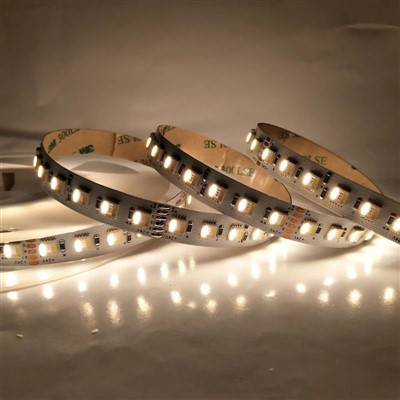

Shenzhen Midoriled Co., Ltd. :Your Professional LED Strip Lights Manufacturer !
Midoriled is a professional LED manufacturer with the goal of providing quality LED technology, great customer service, and superior product support to our customers. Over the years we’ve expanded to be one of the largest leading suppliers of LED lighting and accessories in China. We now serve all types of customers within the Industrial, Commercial, Vehicle, Residential, and Landscape sectors. We’re constantly looking out for new products and adding more to our existing product lines.
Rich Products
We specialize in LED linear strips, LED modules, LED wall washers, LED fluorescent lights, LED spotlights, LED accessories and so on, all of which are widely used in urban lighting decoration, advertising light boxes backlight, and indoor home.
Quality Assurance
Midoried has a well-trained team including full experienced technicians and salesman. All our offerings are CE and SGS certified and are the preferred choice of architects, lighting designers, and electrical contractors because of their robust construction, durability, and top-notch color rendering capability.
Unmatched Warranty
We guarantee their quality with up to 3 years of warranty on most of our LED Strips. If the color temperature, brightness, or size does not work for your project, you can return them back to us hassle-free.
Leading Service
We have many years of industry experience, a complete production management, quality supervision, and sales service operation system. Whether you want to purchase LED strip lights or LED modules, just email your requirements and we can customize the product for you.
-
![Double Line Cob Led Strip]() Double Line Cob Led StripFlexible COB LED strip, also called COB LED Strip, It took the flip chip technical to die-bond the chip directly on the FPC board and then cover it by phosphor & silicone gel.view more
Double Line Cob Led StripFlexible COB LED strip, also called COB LED Strip, It took the flip chip technical to die-bond the chip directly on the FPC board and then cover it by phosphor & silicone gel.view more
Compared to regular LED strip lights,the light is... -
![UVC LED Strip Flexible LED Strip]() UVC LED Strip Flexible LED StripUV LED is greatly improve and popular use in the recent days,it have many function:Germicidal,Sterilization,purification devices,Water dispenser disinfection,the flexible UV led strips have many advantage,can be cut and bend in...view more
UVC LED Strip Flexible LED StripUV LED is greatly improve and popular use in the recent days,it have many function:Germicidal,Sterilization,purification devices,Water dispenser disinfection,the flexible UV led strips have many advantage,can be cut and bend in...view more -
![5050 RGB LED Strip Kit]() 5050 RGB LED Strip KitMIDORILED is a company that focuses on creating the best lighting experiences by constantly pursuing the highest quality products and being endlessly innovative. MIDORILED products are the result of our industry-leading research &...view more
5050 RGB LED Strip KitMIDORILED is a company that focuses on creating the best lighting experiences by constantly pursuing the highest quality products and being endlessly innovative. MIDORILED products are the result of our industry-leading research &...view more -
![Flexible LED Strip 3528 120LEDS]() Flexible LED Strip 3528 120LEDSRich color, variety of color optional, easy to install.view more
Flexible LED Strip 3528 120LEDSRich color, variety of color optional, easy to install.view more
also can be used according to the environmental needs waterproof design, waterproof rate as high as IP68,
use DC12 v / 24 v voltage, safe and reliable.
LED Strip... -
![led strip Side view]() led strip Side view1.The led strip shine out of the side of the strip. and also soft FPC,ultra-flexible,can be bent as you like,can be fixed at any irregular place with beautiful colorview more
led strip Side view1.The led strip shine out of the side of the strip. and also soft FPC,ultra-flexible,can be bent as you like,can be fixed at any irregular place with beautiful colorview more
2.flexible printed circuit,can be cut and connected as you... -
![SMD2835 S shape type bendable flexible led strip]() SMD2835 S shape type bendable flexible led stripUnique S-type zigzag pattern allows for bending the flexible LED strip to make bends, curves and to form shapes you'd never imagine with traditional flexible LED strip * 60 LED per meter 2835 bendable flexible LED strip eliminates the...view more
SMD2835 S shape type bendable flexible led stripUnique S-type zigzag pattern allows for bending the flexible LED strip to make bends, curves and to form shapes you'd never imagine with traditional flexible LED strip * 60 LED per meter 2835 bendable flexible LED strip eliminates the...view more -
![SMD 5630 2 Line Flexible LED Strip Light]() SMD 5630 2 Line Flexible LED Strip Light120LEDs/m DC12V 5 Meter/Lotview more
SMD 5630 2 Line Flexible LED Strip Light120LEDs/m DC12V 5 Meter/Lotview more
Super Bright But Running At Low Temperature 5630 High intensity And Reliability
Flexible Ribbon for Curving Around Bends
Completely Smooth And Even Light Spread. -
![SMD 3528 led strip]() SMD 3528 led stripThe 3528 led strip Widely applicability, easy to install and maintain;view more
SMD 3528 led stripThe 3528 led strip Widely applicability, easy to install and maintain;view more
Extremely luminous, with wide viewing angle;
Energy saving and environmentalconservation, long lifespan;
Operation low voltage (DC12VOR 24V) for... -
![led strip 3528 120leds/m outdoor led strip lights]() led strip 3528 120leds/m outdoor led strip lightsThis versatile LED Strip Light is in 9.6W/M (3.2 Watts foot). It uses a 3528 LED chip placed every 0.33”(8.3mm). This LED Strip has High Density Lighting with 120 diodes per meter or (39/ft).view more
led strip 3528 120leds/m outdoor led strip lightsThis versatile LED Strip Light is in 9.6W/M (3.2 Watts foot). It uses a 3528 LED chip placed every 0.33”(8.3mm). This LED Strip has High Density Lighting with 120 diodes per meter or (39/ft).view more
It is cuttable every 3 LED chips or... -
![2216 Flexible LED Strip 120led/m]() 2216 Flexible LED Strip 120led/m1. Safety voltage DC24V, which can be ensured human body safety when working.view more
2216 Flexible LED Strip 120led/m1. Safety voltage DC24V, which can be ensured human body safety when working.view more
2. 7-9LM/LED SMD2216 LED Chip, high light efficiency and one bin 3-SDCM Consistency, make sure the same CCT even in different orders.
3. Real... -
![RGB Side View 020 SMD Flexible LED Strip]() RGB Side View 020 SMD Flexible LED Strip1.020 RGB side view assembled LEDs 2.One Bin for production, uniform lightview more
RGB Side View 020 SMD Flexible LED Strip1.020 RGB side view assembled LEDs 2.One Bin for production, uniform lightview more
3.High Birghtness and high density
4.Unqiue and strong PCB design
5.2 years warranty/ 3 years warranty -
![smd 2835 led strip light]() smd 2835 led strip light1.This flexible LED strip adopt high bright SMD 2835 LED as lihgt sourse,Good Heat Dissipation, High stability.view more
smd 2835 led strip light1.This flexible LED strip adopt high bright SMD 2835 LED as lihgt sourse,Good Heat Dissipation, High stability.view more
2.DC12V OR 24V Low power consumption, super-bright but running with low temperature.
3.Can be cut off on...


What are LED Strip Lights?
TLED strip light refers to a versatile form of LED lighting which can be used to light a range of settings, including both outdoor and indoor spaces. LED strip lights consist of strips of flexible circuit board featuring lots of very small LED light emitters; they are usually bought as a roll of lights which can then be cut to size and mounted using a double-sided adhesive backing. LED strip lighting is available in a wide range of colors and brightness levels, and because of the unique way the lights are used, it is very easy to create all kinds of light effects and displays using one or multiple rolls of LED strip lights.
In the vast landscape of lighting solutions, LED light strips have carved out a substantial niche. Their versatility, energy efficiency, and adaptability have propelled them to popularity in numerous applications, from home decor to commercial and event lighting. Given their varying functionalities and features, understanding the different types of LED light strips can be crucial when deciding the best fit for your project.
Single-Colour LED Light Strips
Single-colour LED light strips offer a simple yet versatile lighting solution that emits a stable, consistent colour. Available in standard hues such as white, red, green, or blue, each colour serves a unique purpose. These LED light strips are prized for their unchanging hue, perfect for accent or task lighting needs. Despite their simplicity, they provide efficient lighting for diverse needs and are adaptable to a wide range of applications. Their robust and compact design allows for their use in various settings, including residential, commercial, and gardens.
RGB LED Light Strips
RGB LED light strips offer an innovative solution in the world of lighting, allowing users to mix red, green, and blue primary colours to achieve a wide array of hues. Controlled by a remote or digital controller, these strips enable the manipulation of colour intensities, allowing the creation of personalized shades for different settings. RGB LED light strips’ adaptability makes them versatile for various environments like homes, offices, or outdoor spaces.
RGBW LED Light Strips
RGBW LED light strips are an evolution in lighting technology, enhancing the capabilities of RGB strips by integrating an additional white LED chip. This innovation allows for greater colour accuracy and the creation of more nuanced shades, broadening the available colour palette. This clear, bright light is perfect for task lighting and spaces requiring optimal illumination. They are suitable for a range of settings, from residential to commercial and outdoor environments.
Tunable White LED Light Strips
Tunable white LED light strips represent a major advancement in LED lighting, featuring the ability to modify the colour temperature from warm to cool white. The warm tones offer a relaxed setting, while the cooler end of the spectrum provides a lively, energetic brightness conducive to productivity. Beyond creating ambience, tunable white strips have practical applications in task lighting. Their adjustable nature ensures optimal illumination for various tasks or times of the day.
COB LED Light Strips
COB (Chip on Board) LED light strips are an innovative evolution in LED technology, offering superior lighting uniformity and high light output due to the densely packed LED chips on the same board. This unique configuration results in smoother, more consistent lighting, reducing shadows and providing an aesthetically pleasing effect. The small and flexible form factor of COB LED strips allows them to adapt to a wide range of applications, from under-cabinet lighting to TV backlighting. Their design enhances heat dissipation, ensuring the longevity and efficiency of the lighting system.
Waterproof LED Light Strips
Waterproof LED light strips, designed to endure damp and water-exposed environments, are encased in a protective nano tech waterproof coating for added durability and water resistance. Their design extends their usage beyond dry, indoor locations to wet or moist areas with an IP rating of IP68. These strips are perfect for providing ambient lighting in bathrooms with high humidity, or outdoor spaces like gardens, patios, or decks.
Flexible vs. Rigid LED Light Strips
Flexible and rigid LED light strips offer different advantages to meet various lighting needs. Flexible LED strips can bend and curve to fit complex or irregular surfaces, ideal for tracing patterns, highlighting contours, or creating dynamic lighting effects on curved walls, columns, or intricate architectural elements. Their flexibility enables custom lighting designs, broadening creative possibilities. Conversely, rigid LED strips maintain a fixed shape, providing a uniform, straight line of light. They are optimal for scenarios requiring consistency and precision, such as under-cabinet lighting, linear architectural detailing, or display case illumination.
Addressable LED Light Strips
Addressable LED light strips revolutionize customizable lighting by allowing each LED on the strip to be controlled individually. This feature facilitates the creation of complex patterns, gradients, and effects, transforming the LED strip into a dynamic canvas of light. The design flexibility of these strips extends from creating ambient mood lighting with slow colour transitions to crafting vibrant, music-synchronized light displays. These strips can also interact with external inputs like music or ambient sound, enabling immersive and responsive lighting environments.
Benefits of LED Strip Lights
The popularity of LED strip lights is really booming. It’s all thanks to their flexibility, both literal and practical — they are one of the most versatile options for illuminating various areas of homes and other buildings. Here are the most important benefits of using them in your place.
Long Lifespan
Lifespan of a light source is a clear indicator of its quality. LED light bulbs and strips are far more long-lived than traditional lighting — their average lifespan (operating hours) is between 50k to 100+k. This means that you won’t have to change them often, which in turn will significantly lighten your maintenance budget.
01
Energy Efficiency
LED based light sources can convert almost 80% of their energy into it. Therefore, replacing traditional lighting with LEDs can make it about 65-75% more energy efficient. This will not only lower your electricity bills, but also make your home far more environment-friendly. Moreover, high energy efficiency means that LED lights don’t heat up and can be safely touched, which is crucial when there are young children around. They also won’t overheat and pop.
02
Versatility
LED strip lights are flexible strips/tapes with peel-and-stick backs which can be placed almost anywhere and can be completely hidden out of sight — only the glow will be visible to the observer. They can be used both as additional points of illumination or as its main providers. LED strip lighting can be colour changing, making it a great mood setter. There are even strips with waterproof casings, which can be safely used even in wet places, e.g. in bathrooms, washing rooms or around the pool.
03
Quality Lighting
Light provided by a LED strip light (or bulb) is precise and bright, providing ideal conditions for picking out the finer details. This also makes them great for lighting studies, working or reading areas. LED lighting is really well-balanced — there’s never any excess brightness or contrast level. LED strips have astonishingly high CRI (Colour Rendering Index), which means that everything under LED illumination will be visible in its original colour.
04
Smooth Installation
LED strip lights, especially plug and play variations, are straightforward and easy to install. They can be set up without any hurdle and, in most cases, don’t need the involvement of an electrician (although connecting wired LED strips to mains may be tricky) — just make sure to pick up the right transformer.
05
LED strips find diverse applications across residential, commercial, and creative environments, offering versatile lighting solutions that cater to a wide range of needs and aesthetic preferences. The flexibility, energy efficiency, and customizable features of LED strips make them well-suited for an array of lighting applications, contributing to both functional illumination and captivating visual displays.
Ambient Lighting
LED strips have become synonymous with ambient lighting, transforming ordinary spaces into vibrant, visually appealing environments. They are commonly used to backlight TVs, accentuate architectural features, or add a touch of warmth to living spaces.
Home Decor
Interior designers and homeowners have embraced LED strips as a creative tool for home decor. These strips can be strategically placed under cabinets, along staircases, or around mirrors to enhance the aesthetic appeal of any space. The ability to control colors and brightness levels makes LED strips a dynamic and customizable option for creating unique atmospheres.
DIY Projects
The flexibility of LED strips makes them ideal for do-it-yourself (DIY) projects. Enthusiasts have incorporated LED strips into various creations, from personalized signage to interactive art installations. The ease of installation and low power consumption make them a favorite among hobbyists.
Automotive Lighting
LED strips have found applications in the automotive industry, both for aesthetic and functional purposes. They are used in car interiors for ambient lighting and can be customized to match the driver’s preferences. Additionally, they serve as stylish exterior accents, enhancing the visual appeal of vehicles.
Commercial Lighting
LED strips have made their mark in commercial spaces, providing energy-efficient and visually striking lighting solutions. They are commonly used in retail settings to highlight product displays, create immersive atmospheres in restaurants, and even add a futuristic touch to office spaces.
Components of LED Strip Lights
LED strip lights consist of several key components that work in unison to facilitate their functionality and versatility. Understanding these components provides insight into the inner workings of LED strips and the factors that contribute to their reliable and efficient operation.
Light-Emitting Diodes (LEDs)
The LEDs are the fundamental light-emitting components of the strip. These semiconductor devices emit light when an electric current passes through them, providing the illumination that is characteristic of LED strips. LEDs are available in various colors and can be arranged to achieve different lighting effects, making them a versatile lighting solution.
Flexible Circuit Board
The flexible circuit board serves as the physical foundation of the LED strip, providing a platform for mounting the LEDs and connecting the electrical components. This flexible construction enables the strip to conform to curved or irregular surfaces, expanding its potential applications and creative possibilities.
Resistors
Resistors are integrated into the circuitry of LED strips to regulate the flow of electrical current to the LEDs, ensuring that they receive the appropriate voltage for optimal performance. By controlling the current, resistors contribute to the longevity and stability of the LEDs, preventing overloading and maintaining consistent illumination.
Power Source
LED strips require a power source to supply the necessary electrical energy for illumination. This power source is typically a low-voltage direct current (DC) provided by a driver or transformer. The selection of an appropriate power source is crucial for the reliable and safe operation of LED strips.
Controllers and Dimmers
Some LED strips incorporate controllers and dimmers, allowing users to adjust the brightness, color, and dynamic lighting effects. These components enhance the versatility of LED strips, enabling users to customize their lighting installations to suit specific preferences and applications.
Adhesive Backing
Many LED strips feature an adhesive backing that facilitates easy and secure installation on various surfaces. This adhesive backing simplifies the mounting process, making LED strips accessible for a wide range of lighting projects and applications.
For the most part, LEDs require little to no effort in terms of maintenance. In fact, this is one of the primary benefits of LEDs over more traditional bulbs. But there are a few simple steps which can be taken to help maintain the quality and extend the life of your LED lighting system.
Provide Occasional Dusting
LED systems which are properly installed will typically require little maintenance beyond a light dusting from time to time. We recommend utilizing a soft, dry, microfiber cloth, avoiding any materials which may snag on LED components.
Check Connection Points
Over the lifetime of an LED system, normal wear and tear can occasionally cause connection points to come loose. If LEDs fail to turn on, or appear to be flickering, ensure that all connectors running to and from the affected area remain securely fastened.
Remove Splatters and Stains
From time to time, even the most well maintained LED system may require a bit of sanitation, especially those located under kitchen cabinets. Any liquid or residue should be removed immediately using a dry cloth or paper towel. Avoid materials which may snag on LED components. Dab or blot dry, do not scrub.
Eliminate Debris or Residue
If a splatter or stain has dried, utilize a warm, damp cloth to gently dab or blot the affected area. Do not scrub. Avoid materials which may snag on LED components. If residue is particularly sticky, a small amount of rubbing alcohol may be applied to the LED strip using a paper towel, or soft cloth.
Avoid Corrosive Cleaning Agents
Harsh chemical cleaning products which are commonly used in kitchens or bathrooms should never be applied to LED products. These compounds may compromise adhesives, and may even cause LED components to corrode and fail over time.
When working on installing your led strips, you need to make sure that your kit is well equipped with the necessary led accessories. These accessories are meant to make your work easier and facilitate a smooth installation process. However, even with the necessary accessories and tools, you still need the knowledge that accompanies them. Knowing how to carry out your installment and also how the accessories are used is very important. If you’re wondering what steps are entailed in installing led strips, here is how you should go about it.
Check Your Strip Lights
It is important to ensure that your strip lights are working and in the right condition. The best way to do this is by unrolling your led strip lights and connecting them to your power supply. Once the lights are on, you’ll be in a better position to decide whether you’ll use a dimmer if they are too bright or install them as is.
Take Careful Measurements and Cut
Before installing your led strips, you need to ensure that you first measure out your surface and make sure to be accurate. This will help you have a clear understanding of how long your led strips need to be. After you have your measurements, the next step is to have your led strip cut to size. Keep in mind that cutting led strips requires you to stay within the cut lines indicated on the led. This ensures that you don’t ruin the lights by cutting any of the diodes in the strip.
Connect Your Led Strips
Depending on the surface you’re working with, you may have to connect two or more led strips with the possibility of catering for corners. Determine whether you’re using a single-colored led strip or a multi-colored one. This will help you choose the right connectors to make your led lights work. Also, depending on what your aim is with the connection, you can either use an end to end connector or an led to wire connector.


Install the Led Strip on Your Desired Surface
The first thing to do is to make sure that your surface is clean and ready for installation. Wipe down your surface and leave it dry to ensure that the led strip adheres well. Your strip comes with a strip adhesive that you can use. All you need to do is pull back the protective cover and stick your led strip onto your surface. You however also have the option of using mounting clips to ensure that the strip is well secured.
Install Your Dimmer
There are different types of dimmers that you can consider for your project. They’ll help you turn down the brightness of your lights whenever you want to. Mounting your led dimmer can be done using clips. The only thing to consider is how well concealed it is. Try to have it somewhere it is not easily noticeable. Connecting your led dimmer to your strip lights should be done before connecting the lights to power. Connect the wires from your dimmer to your led strip using the necessary connectors. Next, secure the other wires hanging from your dimmer directly to your power supply.
Connect to a Power Source
There are different power supplies for you to consider when looking for ways to power your led strip lights. These power supplies should be connected to your dimmer however if you’ll not be using one, you can connect it to the led strips. Connecting it to the led strip may require the use of led to wire led strip connectors to better connect the strip to power.
Frequently Asked Questions
We're professional led strip lights manufacturers and suppliers in China, specialized in providing high quality customized products. If you're going to buy discount led strip lights in stock, welcome to get pricelist from our factory.
rgb side view 020 smd flexible led strip, uvc led strip flexible led strip